
If you’re planning a renovation, reverse engineering a part, or documenting an industrial facility, understanding 3D scanning costs is essential for accurate budgeting. Prices vary dramatically based on what you’re scanning and what you need delivered.
Key Takeaways
- Most 3D scanning projects in 2026 fall between $250 and $50,000 depending on size, complexity, accuracy requirements, and deliverables.
- Simple small-object scans for basic visualization typically cost $250–$800, while residential building scans range from $1,000–$3,500.
- Commercial and industrial scans usually start around $5,000 and can exceed $50,000 for large facilities, plants, or multiple buildings.
- Scan-to-CAD and scan-to-BIM services are charged separately, commonly from $0.50 to $10.00 per square foot depending on detail level.
- The main cost drivers are object size, geometry, accuracy, color capture, geographic location, and timeline—define your scope clearly before requesting quotes.
What Is 3D Scanning and Why Costs Vary So Much
3D scanning captures millions of data points to create an accurate digital replica of a physical object or space. Using laser scanning technology, structured light, or photogrammetry, different scanners emit laser pulses or project patterns to collect measurements and generate point clouds or mesh models.
The same scanning technology serves wildly different applications. A designer might scan a car rim for product redesign, while a construction firm documents a 200,000 square foot industrial facility for renovation planning. This range of applications explains why price quotes span from a few hundred dollars to six figures.
Understanding the difference between deliverable types helps clarify costs. A basic object scan produces raw mesh data suitable for visualization. Building and facility reality capture generates comprehensive 3D as-built documentation of existing conditions. Full scan-to-CAD or to BIM services convert that scanned data into parametric models ready for engineering work.
Hardware costs built into service pricing reflect this diversity. Hobby-grade scanners cost under $1,000 but lack commercial robustness. Professional systems run $2,000–$40,000, while high-end terrestrial laser scanners for building documentation exceed $100,000. Service providers amortize this equipment investment into their rates.
Typical 3D Scanning Price Ranges (Answer First)
Here’s what 3D scanning costs in 2026 across common project types:
Small objects and simple parts: $250–$1,200 per object depending on complexity and required accuracy.
Residential homes and apartments: $1,000–$3,500 per unit including basic floor plans or low-detail BIM models.
Commercial spaces (restaurants, retail, offices): $3,000–$10,000+ depending on MEP complexity and ceiling detail.
Industrial plants and large facilities: $10,000–$50,000+ depending on area, safety requirements, and industrial 3D scanning documentation depth.
Many providers quote per project for defined scopes, per day on-site for exploratory work, or per square foot for building projects. The pricing model affects how easy it is to compare offers.
To illustrate typical 2026 costs: scanning a 2,000 square foot single-family house runs approximately $1,200–$2,500 including basic as-built plans. A simple 100,000 square foot warehouse costs roughly $0.02–$0.05 per square foot, or $2,000–$5,000 for scanning only. A 150,000 square foot hospital requiring detailed BIM documentation might reach $40,000–$60,000 including complex scan-to-BIM modeling.
Rush premiums apply. Emergency work, night operations, or weekend scheduling typically adds 20–40% to standard rates. Accelerated schedules compress timelines but increase crew costs.
Key Factors That Drive 3D Scanning Costs
Understanding cost drivers helps you predict whether your project will land at the lower or upper end of typical ranges.
- Project Size: (square foot area or object dimensions) is the primary driver because it directly determines time on site and total data volume requiring processing.
- Geometry and Complexity: Intricate details, dense pipework, decorative façades, or complex geometry require more scan positions and longer post processing time.
- Required Accuracy and Resolution: Affects equipment selection and workflow rigor. Achieving ±1–3mm tolerances is standard; sub millimeter accuracy demands specialized equipment and increases costs 30–70%.
- Color and Texture Capture: Adds photography, lighting considerations, and texture cleanup time. True-color 3D models require substantially more data processing than grayscale intensity scans.
- Access and Safety Requirements: Can dramatically increase costs. Work at height, confined spaces, or hazardous environments require additional crew, specialized gear, and permits.
- Location and Travel: Affect mobilization expenses. Projects in high-cost cities like New York or remote sites incur 20–50% premiums over standard rates.
- Timeline Constraints: Command premium rates. Night work, weekend operations, and strict shutdown windows increase costs.
Project Size
Project size, measured in square footage or object dimensions, is the most significant cost driver. Larger projects require more time on site and generate more data, increasing both field and processing costs.
Geometry and Complexity
The complexity of the object or environment being scanned matters significantly. Intricate details, dense pipework, decorative façades, or complex geometry require more scan positions and longer post-processing time.
Required Accuracy and Resolution
The required accuracy and resolution affect equipment selection and workflow rigor. Achieving ±1–3mm tolerances is standard; sub-millimeter accuracy demands specialized equipment and increases costs by 30–70%.
Color and Texture Capture
Color and texture capture adds photography, lighting considerations, and texture cleanup time. True-color 3D models require substantially more data processing than grayscale intensity scans.
Access and Safety Requirements
Access and safety requirements can dramatically increase costs. Work at height, confined spaces, or hazardous environments require additional crew, specialized gear, and permits.
Location and Travel
Location and travel affect mobilization expenses. Projects in high-cost cities like New York or remote sites incur 20–50% premiums over standard rates.
Timeline Constraints
Timeline constraints command premium rates. Night work, weekend operations, and strict shutdown windows increase costs.
A concrete example: a 2025 refinery pipe gallery scan requiring explosion-proof procedures cost roughly 40–60% more than an equivalent non-hazardous mechanical room of similar size.
How Much Do 3D Scanning Services Cost by Use Case?
Pricing bands differ substantially across small parts, buildings, and large infrastructure. Here’s what professional scanning services charge across common applications.
Small Parts and Product Design
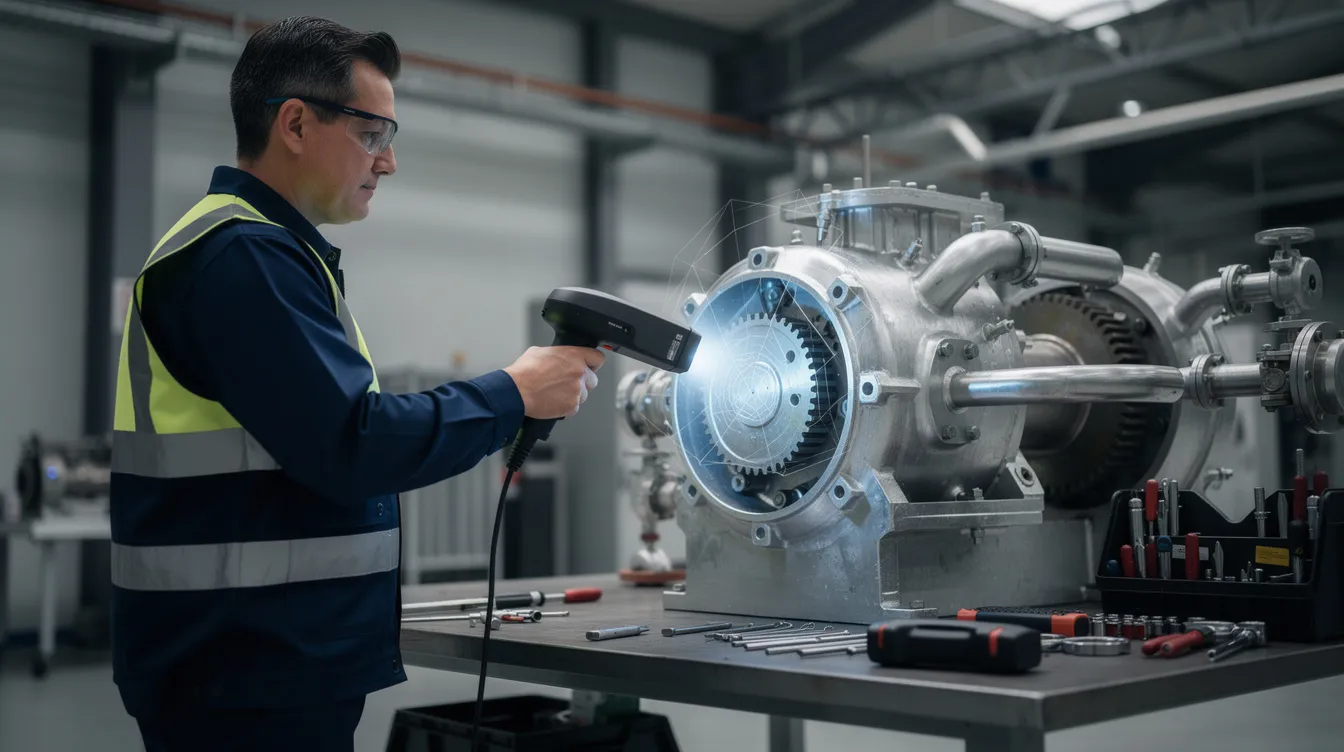
Scanning items like brackets, automotive components, consumer products, or dental models falls into the most accessible price tier. Typical 2026 service prices run $250–$600 for simple parts and $800–$1,500+ for complex objects like turbocharger housings or gearbox cases requiring precise measurements of sharp edges and intricate features.
Reverse engineering adds substantial cost. Converting a cleaned mesh into a fully parametric CAD model typically doubles or triples the base scanning price, as technicians must interpret geometry and apply design intent.
Architectural and Construction
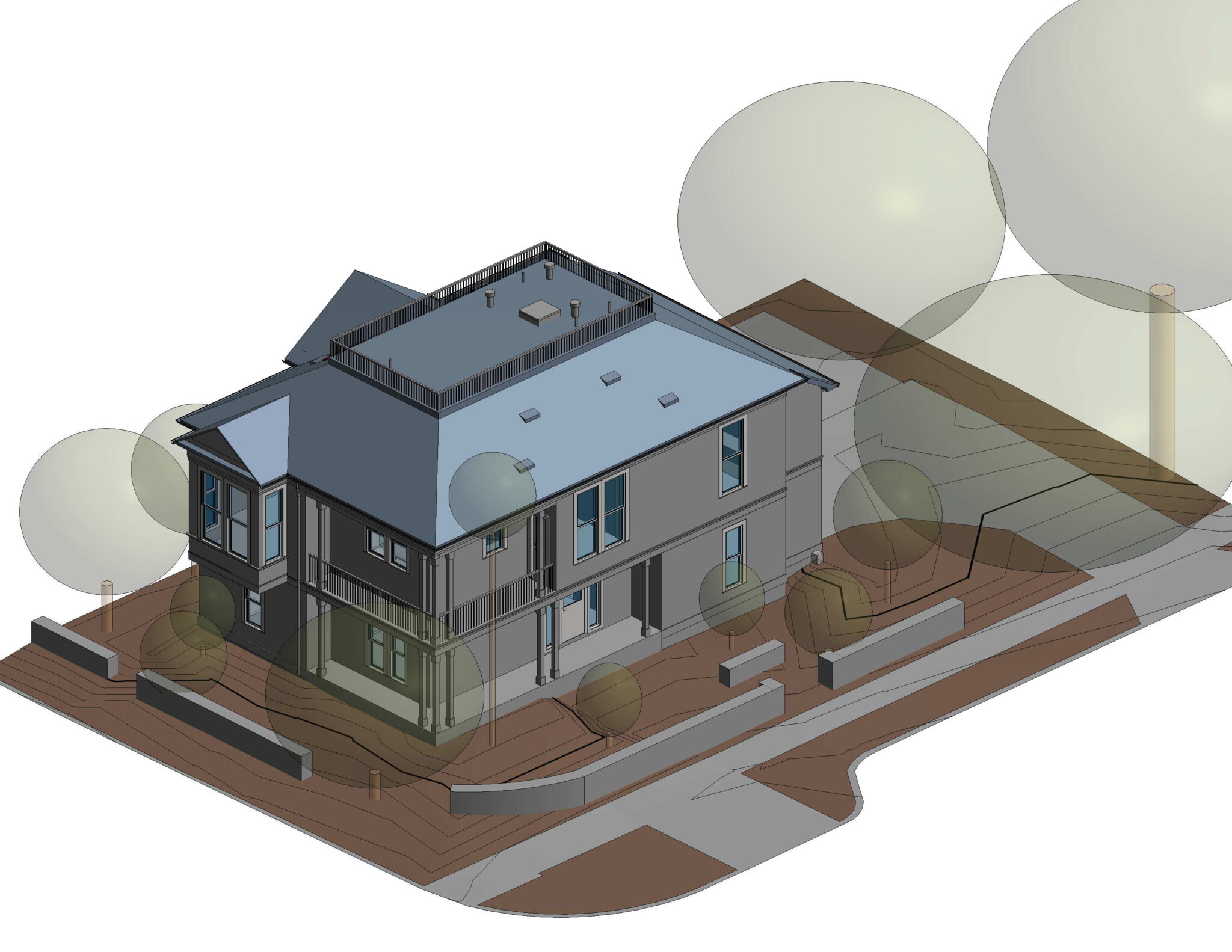
For residential projects, scanning a 1,000–3,000 square foot home or condo typically costs $1,000–$3,500 including basic floor plans or a Revit model at low LOD.
Commercial spaces scale accordingly. A 4,000 square foot fast food restaurant or 10,000 square foot retail store typically runs $3,000–$8,000 depending on MEP complexity and ceiling conditions. Complex environments with exposed mechanical systems or multiple structural elements push toward the higher end.
Detailed MEP or high-LOD models add 30–70% to base scanning costs.
Industrial Facilities and Plants
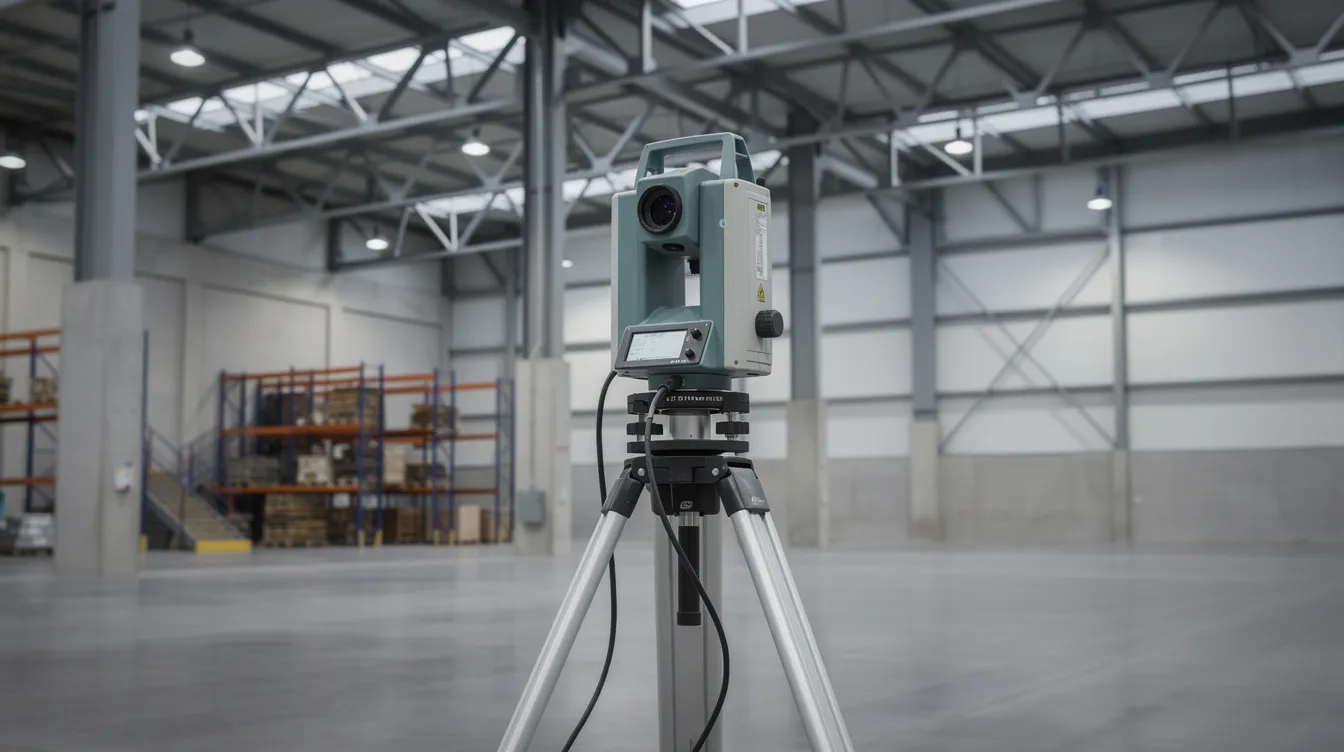
Refineries, chemical plants, manufacturing lines, and power stations represent the highest-cost segment due to project complexity and safety requirements, where 3D laser scanning for building inspection and analysis can significantly reduce risk. These industrial settings require specialized expertise and careful planning.
Typical ranges: $10,000–$50,000 per production line or facility section (30,000–80,000 square foot) for comprehensive capture. A 2024 petrochemical plant expansion required $60,000+ in scanning and modeling but prevented multimillion-dollar rework—demonstrating the strategic investment value of accurate data.
Heritage, Museums, and Cultural Assets
Monuments, sculptures, archaeological sites, and historical façades require high-detail capture with careful methods, often leveraging historic preservation 3D scanning and documentation. Typical costs range $2,000–$10,000+ depending on artifact count and documentation requirements including color capture and archival models.
Infrastructure
Bridges, tunnels, and exterior structures require planning for access, traffic control, and typically higher mobilization costs, similar to enhanced building inspection using LiDAR and photogrammetry. Even a small bridge or tunnel section easily runs $5,000–$25,000 depending on length and safety constraints.
Scan-to-CAD and Scan-to-BIM: Modeling Costs on Top of Scanning
Raw scans—point clouds and meshes—are rarely final deliverables in comprehensive 3D scanning, BIM, and digital twin services. Converting them into usable CAD or BIM models is often a separate, substantial cost that can exceed scanning itself. This distinction affects your total project budget significantly.
Typical 2026 scan-to-BIM price ranges by complexity:
Basic architectural BIM: $0.50–$3.00 per square foot for walls, floors, roofs, and basic fenestration.
Detailed architectural and structural: $3.00–$5.00 per square foot when adding structural framing and slab detail.
Detailed MEP and industrial systems: $5.00–$10.00+ per square foot for dense piping, cable trays, ductwork, equipment, and supports.
The math reveals why modeling fees often dwarf scanning costs. For a 100,000 square foot warehouse, even basic BIM modeling at $0.75 per square foot costs approximately $75,000. The scanning alone might be $2,000–$5,000. Understanding this ratio prevents budget surprises.
For small parts, converting cleaned mesh data into parametric CAD typically costs $500–$3,000 per part depending on complexity and required accuracy for quality control processes.
AI-assisted and cloud-based modeling tools introduced between 2023–2025 are reducing manual processing time for straightforward geometry, but complex projects still require experienced technicians and professional judgment. Always specify deliverable level (LOD/LOI), output files, and technical specifications when requesting quotes.
Hourly Rates, Day Rates, and Per-Project Pricing
Service providers use three main pricing models, often blending them based on project requirements.
Hourly rates work best when scope is uncertain or clients want exploratory work. For 3D scanning technicians, typical 2026 rates run $100–$200 per hour for standard building work. Specialized industrial or high-accuracy metrology projects command $150–$500 per hour due to equipment costs and specialized expertise required.
Day rates simplify budgeting for defined field work. A typical crew with equipment costs $1,200–$3,000 per day for standard architectural scanning. Hazardous or remote locations increase daily rates. This usually covers operator time, scanner amortization, and basic data registration but excludes full modeling.
Per-project pricing provides maximum predictability. Providers estimate total field days, processing time, and modeling scope, then quote a lump sum. This approach suits defined deliverables like “complete as-built plans of a 20,000 square foot office by June 2026.”
When comparing quotes, confirm which activities are included: travel, registration, quality control, modeling, and revisions. Hidden costs often emerge when these details aren’t clarified upfront. A professional service provider should itemize their quote clearly.
How to Budget and Get an Accurate 3D Scanning Quote
Clear project requirements reduce contingency padding and help scanning service company teams sharpen pricing. Before requesting quotes, prepare the following information:
- Site or object description: Type (house, factory line, sculpture), approximate dimensions or area, and sample photos if possible.
- Purpose and tolerance: Why the data is needed (renovation, reverse engineering, facility management documentation) and acceptable accuracy levels (±2mm vs ±10mm).
- Deliverables: Point cloud only, mesh model, 2D plans, CAD, BIM with software version and LOD specification. Be specific about output files.
- Timeline: Desired field dates, project timelines for deliverables, and whether work must occur at night, on weekends, or during plant shutdowns.
- Constraints: Access issues, safety risks, restricted hours, or regulatory requirements affecting crew size and equipment.
Obtain at least two or three detailed quotes, ensuring each provider prices identical scope and deliverables. For complex or first-time scanning projects, plan 15–20% contingency for unforeseen scope expansion.
A 15–30 minute discovery call before finalizing quotes often saves money by refining scope and preventing post-scanning surprises. This conversation helps both parties align expectations for project success.
FAQ: 3D Scanning Costs in Practice
Is it cheaper to buy a 3D scanner or hire a 3D scanning service?
Entry-level scanners under $1,000 work for hobbyists or simple projects but rarely meet commercial tolerance requirements. Professional systems like the Artec Space Spider range from $2,000–$10,000, while industrial-grade scanners run $15,000–$40,000+. High-end terrestrial units using light detection and ranging technology exceed $100,000.
For occasional projects—a few times yearly—hiring professional services is almost always more economical once training, software licensing, and workflow development are considered. Ownership makes financial sense only when scanning frequently enough (weekly or monthly) to keep equipment and staff fully utilized across various industries.
How long does a typical 3D scanning project take from start to finish?
Field work for small projects like scanning a single object can take under an hour. A 2,000 square foot house typically requires half a day on site. A 100,000 square foot warehouse needs one to two days of scanning.
Data registration and basic cleaning add 1–5 days depending on project size. Full scan-to-BIM or scan-to-CAD delivery extends total timeline to 1–4 weeks for buildings. Large projects involving industrial plants or multiple structures may require several months when including comprehensive documentation.
Always request a detailed schedule covering both site work and data processing phases before committing.
Can I reduce costs by asking for “point cloud only” instead of full models?
Receiving registered point clouds without CAD or BIM conversion is substantially cheaper—often 50% or less of full modeling costs—because it eliminates time-intensive modeling labor.
However, point clouds require compatible software and CAD/BIM skills to utilize effectively. Organizations without in-house expertise may find raw collected data of limited practical value. A cost-effective compromise: order point clouds plus minimal 2D drawings or low-LOD BIM in critical areas, deferring full modeling until specific project requirements emerge.
Does color 3D scanning always cost more?
True-color capture generally increases costs because it involves extra imaging hardware, significantly more data volume, and time-consuming texture cleanup. The scanning process becomes more complex when accurate results must include visual fidelity.
For purely technical applications like structural analysis, clash detection, or quality control, grayscale or intensity-only scans provide sufficient accurate measurements at lower cost. Recommend color capture only when visual realism matters—marketing materials, VR walkthroughs, or heritage visualization where appearance is an essential tool for communication.
How accurate is “good enough” for most commercial 3D scanning projects?
Modern laser scanners commonly achieve millimeter level accuracy (1–3mm) under typical site conditions, which satisfies most architectural, construction, and facility management applications. This precision level lets teams convert point clouds into useful documentation without excessive cost.
Superior accuracy at sub millimeter levels is normally reserved for metrology, precision manufacturing, or critical components and costs more due to specialized equipment and workflows. Different scanners offer varying precision—align accuracy specifications with actual application needs. Renovations of existing offices rarely require the same tolerances as turbine blade inspections or scan objects destined for precision machining.
Related reading: LOD (Level of Development) explained
Frequently Asked Questions
What factors affect 3D scanning cost the most? The size and scope of the site, site complexity and access, the level of detail required in the final model, and which deliverables you need (point cloud, BIM model, or 2D drawings).
Is 3D laser scanning cheaper than traditional measuring? For all but the simplest spaces, scanning is more cost-effective once you account for its accuracy, fewer return visits, and the rework it prevents down the line.
How do I get an accurate quote? Share your site location, approximate size, and how you intend to use the data. Our team can then scope the right deliverables and provide a tailored quote.