
3D laser scanning is an advanced technology that uses laser beams to capture millions of precise measurements, creating detailed and accurate digital models of physical objects, environments, or entire scenes. This process generates what is known as a point cloud—a dense collection of data points representing the exact shape and dimensions of everything the scanner detects. These digital records are invaluable for a wide range of applications, including construction, renovation projects, architectural design, and facility management.
3D laser scanning enables professionals to capture highly detailed spatial data quickly and accurately, improving project accuracy, reducing manual measurement errors, and enhancing collaboration among stakeholders. The technology has become an indispensable tool for construction companies, architects, engineers, and project managers seeking to streamline workflows and ensure quality assurance throughout the construction process.
Modern scanners operate without physical contact with the scanned object or environment, preserving delicate surfaces and improving safety by allowing data capture from a distance. The resulting digital models can be revisited and analyzed at any time, supporting future renovations, facility modifications, and asset management.
The Importance of 3D Laser Scanning in Construction and Design
Imagine being able to capture the precise dimensions and intricate architectural details of an entire building or construction site within minutes. 3D laser scanning makes this possible by rapidly collecting accurate data points that represent complex surfaces and structures. This technology has revolutionized how construction professionals plan, document, and execute projects, enabling them to create precise as-built documentation and digital twins that facilitate better decision-making.
From initial site surveys to renovation projects and quality control inspections, 3D laser scanning provides a comprehensive and accurate digital record that helps reduce costly errors, improve project timelines, and enhance communication among project stakeholders.
What Is 3D Laser Scanning?
3D laser scanning is a process where a device emits laser pulses or laser light toward surfaces and measures the time it takes for the beams to reflect back. By capturing millions of these distance measurements per second, the scanner creates a three-dimensional digital representation of the scanned object or environment.
Most modern 3D laser scanners—often using LiDAR (Light Detection and Ranging) technology—generate a point cloud consisting of millions of data points with precise x, y, and z coordinates. This point cloud serves as the foundation for creating detailed 3D digital models, which can be used for design, analysis, and documentation.
These digital models can be integrated with Building Information Modeling (BIM) software to enhance architectural planning, facility modifications, and asset management.
The accuracy of modern scanners typically ranges within millimeters, providing a level of detail and precision that far exceeds traditional measurement methods.
How 3D Laser Scanning Works
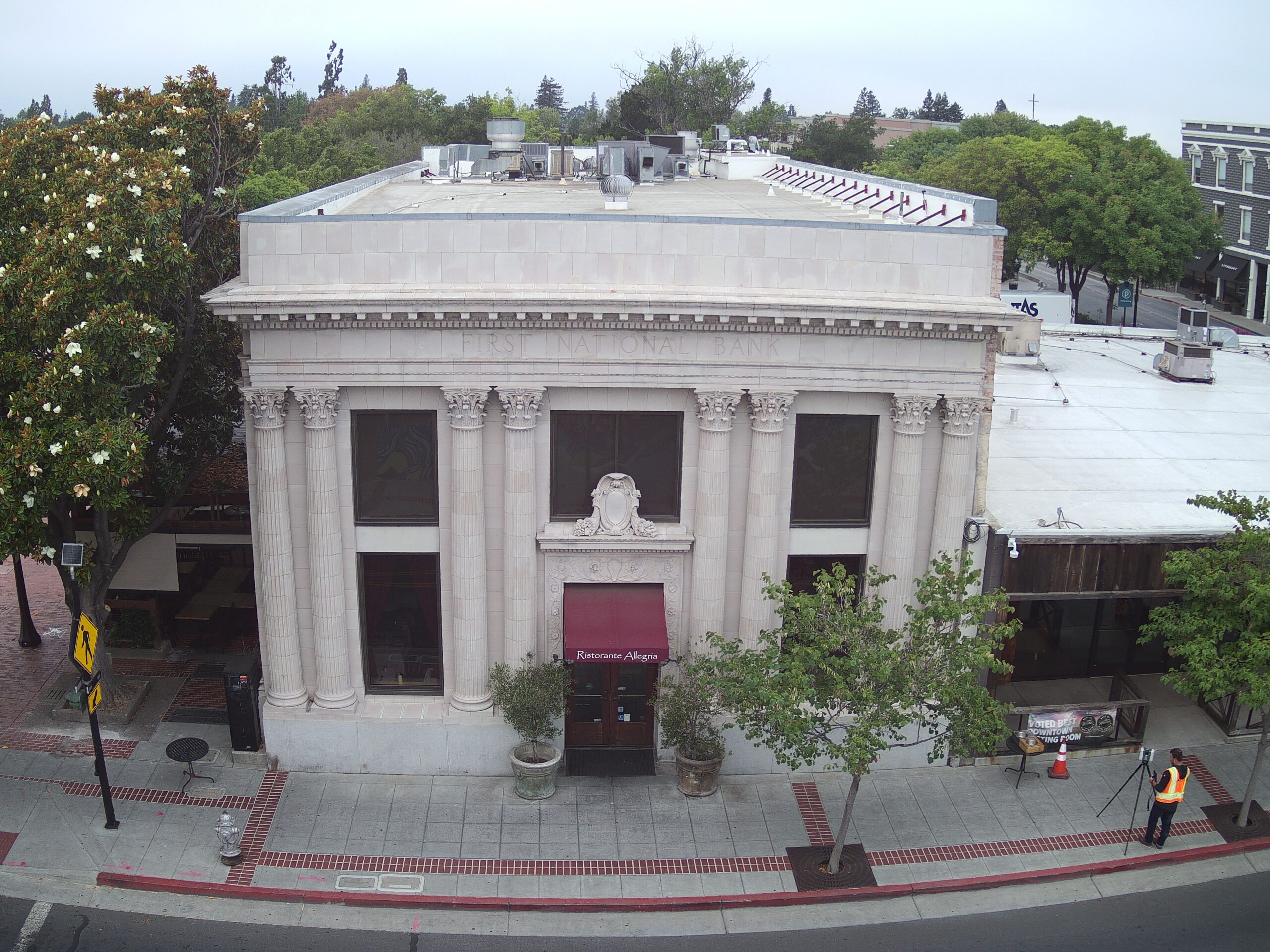
A typical 3D laser scanner is mounted on a tripod and positioned at strategic locations around the area or object to be scanned. It emits laser beams in a systematic pattern, often using rotating mirrors to sweep the beams across surfaces.
The scanner’s sensor measures the time it takes for each laser pulse to return, calculating the exact distance to each point on the surface. By combining these distance measurements with angular data, the scanner determines the precise location of each point in three-dimensional space.
The scanning process generally involves:
- Setting up multiple scan positions to cover the entire object or environment and eliminate blind spots.
- Capturing overlapping scans from different angles to ensure complete coverage.
- Processing and registering the scans using specialized software to align overlapping point clouds into a seamless 3D model.
Modern scanners often include integrated cameras that capture color and texture information, allowing for photorealistic digital representations.
Once processed, the 3D models can be used for measurements, clash detection, visualization, and integration into BIM workflows.
Key Benefits of 3D Laser Scanning
Exceptional Accuracy
3D laser scanning provides precise measurements accurate to within millimeters, enabling professionals to capture intricate architectural details and complex geometries with confidence.
Rapid Data Capture
Laser scanners can collect millions of data points in minutes, significantly reducing the time needed compared to traditional measurement methods.
Non-Contact and Safe
The technology captures data without physical contact, preserving delicate surfaces and allowing measurements in hazardous or hard-to-reach areas while keeping personnel safe.
Comprehensive Digital Records
3D laser scanning creates detailed and comprehensive point cloud files that serve as permanent digital records for as-built documentation, future renovations, and facility management.
Improved Collaboration and Project Timelines
Digital models can be shared among architects, engineers, contractors, and project managers, enhancing communication and coordination to streamline project timelines and reduce costly rework.
Integration with BIM and Other Software
The point cloud data can be imported into BIM software, CAD programs, and other design tools, facilitating clash detection, design validation, and precise planning.
Common Applications of 3D Laser Scanning
Construction and Renovation Projects
3D laser scanning provides accurate as-built documentation, enabling contractors and architects to verify existing conditions and plan renovations or new construction with greater precision.
Architectural Design
Architects use 3D scans to capture existing structures and site conditions, allowing for more informed design decisions and seamless integration of new elements.
Facility Management and Asset Management
Digital models created from laser scans support ongoing facility modifications, maintenance planning, and asset tracking by providing detailed spatial information.
Quality Control and Inspection
3D scanning enables detailed inspections of complex surfaces and structures, helping identify deviations from design specifications and ensuring structural integrity.
Historical Preservation
Laser scanning offers a non-invasive way to document cultural heritage sites and historic buildings, preserving intricate details for restoration and virtual tours.
How 3D Laser Scanning Compares to Traditional Measurement Methods
| Aspect | Traditional Methods | 3D Laser Scanning |
|---|---|---|
| Accuracy | Manual measurements, prone to errors | Millimeter-level precision |
| Completeness | Selective measurements | Captures entire visible surfaces |
| Time Efficiency | Hours to days | Minutes to hours |
| Data Reusability | Limited after collection | Digital models reusable indefinitely |
| Visualization | 2D drawings and photos | Interactive 3D models |
3D laser scanning eliminates many limitations of traditional measurement methods, providing a faster, safer, and more accurate way to capture spatial data.
Limitations and Considerations
While 3D laser scanning offers numerous advantages, some challenges include:
- Cost: High-quality scanners and software can be expensive, though prices continue to decrease.
- Data Management: Point cloud files can be large, requiring powerful computers and specialized software for processing.
- Environmental Factors: Conditions like rain, fog, or reflective surfaces may affect scan quality.
- Training: Proper operation and data processing require skilled personnel.
Conclusion
3D laser scanning is a cutting-edge architectural tool that captures highly detailed spatial data with exceptional accuracy and speed. Its ability to create comprehensive digital records supports construction companies, architects, and facility managers in improving project accuracy, ensuring quality assurance, and optimizing project timelines.
As ongoing advancements make the technology more accessible and user-friendly, 3D laser scanning is becoming an essential part of modern construction, renovation, and asset management workflows.